
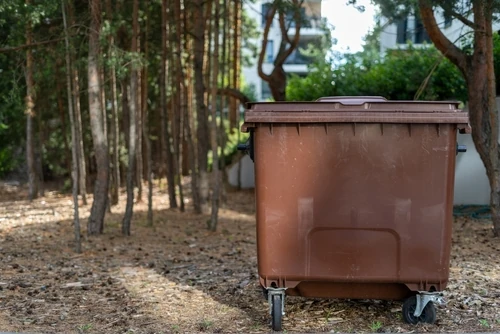
Why using your brown bin makes a real difference
Composting is much more than just an eco-friendly habit: it’s a concrete action that reduces waste, enriches the soil, and actively combats climate change. Yet, far too much compostable material still ends up in the landfill. Did you know that nearly half of your household waste could be composted?
Here are three good reasons to use your brown bin regularly:
- Compostable materials represent approximately 50% of the waste produced in a household.
- Composting does not generate any greenhouse gases, unlike their decomposition in landfill sites.
- Once transformed, these materials become a rich and useful natural fertilizer for the soil.
The organic matter collected in the brown bins is sent to the Bury composting platform, where it is transformed into quality compost. This compost is then used to revegetate roadsides after construction work, as well as to maintain flowerbeds and municipal gardens.
A company committed to a sustainable future
At A. Préfontaine & Associates, we believe that every business can play a role in the ecological transition. That’s why we have integrated eco-responsible practices into our daily operations.
Our concrete commitment:
- We use plant compost from Bury, sourced from municipal brown bins, to manufacture our horticultural potting soil and our planting soil.
- We value recycled and reused materials to reduce our carbon footprint.
- We aim to meet the expectations of consumers who are looking for local, ecological and sustainable solutions.
This approach is part of a modern and responsible business vision, which sets us apart in the excavation market in Sherbrooke.
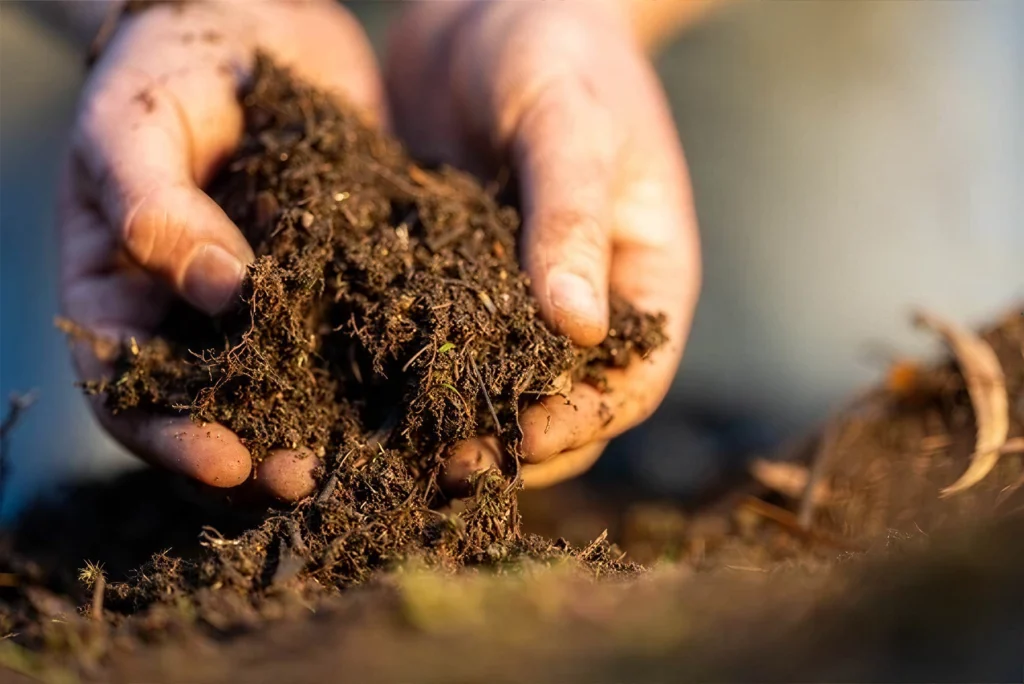
Choosing your compostable bags
Not all bag solutions are created equal. To respect the composting process, it is essential to choose the right bags.
Use only bags certified as compostable by:
- The BNQ (Quebec Standards Bureau)
- The BPI (Biodegradable Plastics Institute)
These bags, made from plant-based materials, degrade naturally at the same rate as food under Quebec conditions.
You can consult the list of companies certified by the BNQ.
Absolutely avoid:
- Traditional plastic bags made from petroleum
- Non-certified biodegradable bags, which degrade far too slowly
These bags are problematic because:
- They cause anaerobic decomposition (without oxygen), which leads to the production of methane, a gas 25 times more harmful than CO₂.
- They slow down the composting process by requiring mechanical intervention to open them and separate the waste.
Practical tips to simplify home composting
Choose a transfer container that suits your kitchen:
- Empty ice cream tub
- Small bin with lid
- Stainless steel or airtight plastic container
Place it in a strategic location:
- Under the sink
- On the counter
- Place directly in the freezer to avoid odors
Add a protective layer to the bottom of the container:
- Paper towels
- Paper bag
- Newspaper sheet
- Certified compostable bag
Also consider lining the inside of the brown bin with cardboard or an open paper bag to reduce the need to wash it frequently.
Make your routine easier by placing your brown wheeled bin in an easily accessible location, especially in winter.
By choosing to compost your organic waste
By choosing to compost your organic waste, you are actively participating in a collective movement towards more responsible resource management. Through its actions and products, A. Préfontaine & Associés is committed to integrating ecology into its practices and offering sustainable solutions to its clients.
Composting is simple. It’s local. And above all, it’s effective.